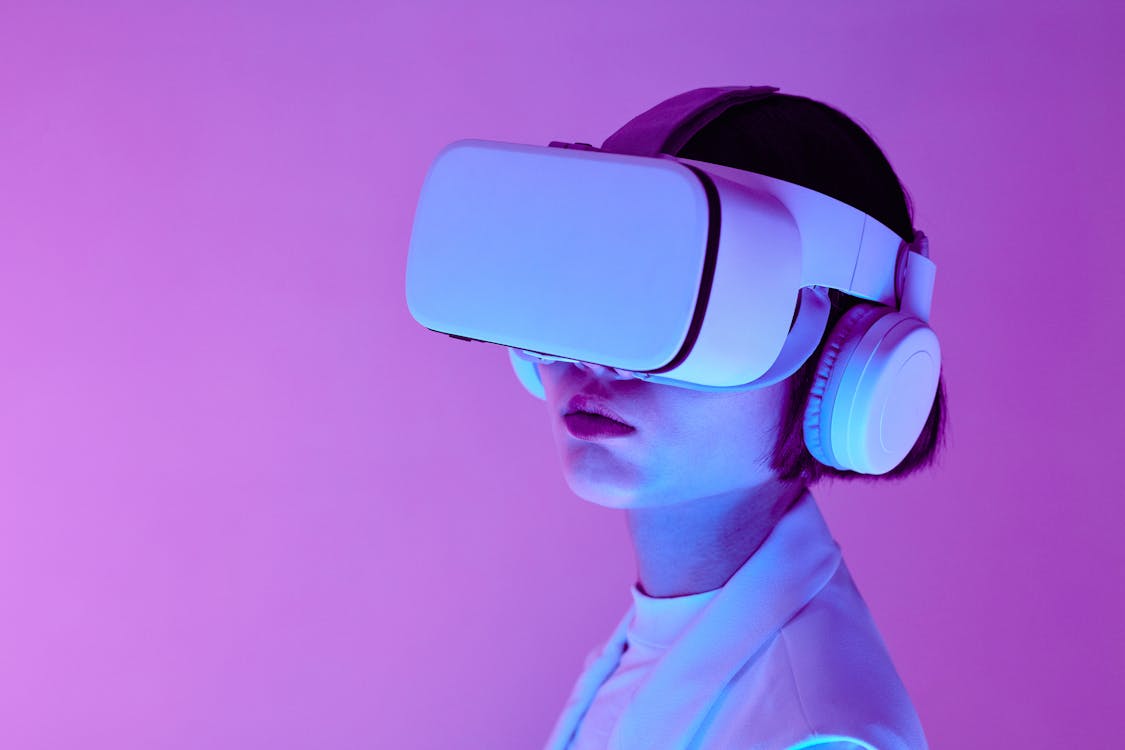
Virtual Reality Applications: Beyond Gaming and Entertainment

Virtual Reality has evolved far beyond entertainment, becoming a transformative technology across healthcare, education, training, and business applications. These immersive experiences are solving real-world problems and creating unprecedented opportunities for learning, healing, and collaboration.
Healthcare and Medical Training
Surgical Training and Planning
VR enables surgeons to practice complex procedures in risk-free environments, improving skills and patient outcomes through realistic simulations.
Pain Management and Therapy
Immersive VR experiences help patients manage chronic pain, anxiety, and PTSD by providing distraction therapy and controlled exposure treatments.
Medical Education
Students can explore 3D anatomical models and participate in virtual dissections, enhancing understanding of complex medical concepts.
Education and Learning
Immersive History Lessons
Students can visit ancient civilizations, walk through historical events, and experience different time periods firsthand.
Science and STEM Education
Complex scientific concepts become tangible through VR visualizations of molecular structures, physics simulations, and space exploration.
Language Learning
VR creates immersive environments where students can practice languages in realistic cultural contexts.
Professional Training
Emergency Response Training
First responders train in realistic disaster scenarios without real-world risks, improving preparedness and response times.
Industrial Safety Training
Workers experience dangerous situations safely, learning proper procedures and safety protocols in controlled virtual environments.
Customer Service Training
Employees practice handling difficult customer interactions in realistic VR scenarios.
Business and Collaboration
Virtual Meetings and Workspaces
Remote teams collaborate in shared virtual spaces, improving engagement and productivity compared to traditional video conferencing.
Product Design and Prototyping
Designers create and test products in virtual environments, reducing development costs and time-to-market.
Real Estate and Architecture
Clients explore properties and buildings before construction, enabling better decision-making and design refinement.
Therapeutic Applications
Physical Rehabilitation
VR-based exercises make physical therapy more engaging and measurable, improving patient compliance and outcomes.
Mental Health Treatment
Therapists use VR for exposure therapy, helping patients overcome phobias and anxiety disorders in controlled environments.
Cognitive Training
Brain training applications help patients recover from strokes and traumatic brain injuries through engaging cognitive exercises.
Future Developments
Haptic Feedback Integration
Advanced haptic technology will add realistic touch sensations to VR experiences, making interactions more natural and immersive.
Social VR Platforms
Virtual social spaces will enable new forms of human connection and collaboration across distances.
AI-Powered Personalization
Artificial intelligence will customize VR experiences based on individual user preferences, learning styles, and therapeutic needs.
The future of VR extends far beyond entertainment, offering solutions to complex challenges across industries while creating new possibilities for human experience and interaction.
Related Posts

The Future of Artificial Intelligence: Trends and Predictions for 2024
Explore the latest AI trends, breakthrough technologies, and predictions that will shape the future of artificial intelligence in 2024 and beyond.


Blockchain Beyond Cryptocurrency: Real-World Applications
Discover how blockchain technology is revolutionizing industries beyond crypto, from supply chain management to digital identity verification.
